
WELCOME BONUS 300%
UP TO €2000 + 100
FREE SPINS
UP TO €2000 + 100
FREE SPINS
Home → Games
Casino games at Winshark Casino
RNG Roulette vs. Live Table: Four Clear Differences
RNG-powered American Roulette, with its double zero and 38 sectors, presents a house edge of 5.26%. This contrasts with European Roulette, which features a single zero and 37 sectors, offering a more favourable RTP of 97.30% and a house edge of 2.70%. The inclusion of the '00' significantly alters the game's mathematical structure for the player.
In French Roulette, the presence of rules like La Partage or En Prison for even money bets can further reduce the house edge to 1.35%. However, for inner bets in French Roulette, where these rules do not apply, the house edge remains at 2.70%, identical to European Roulette. This distinction is crucial for strategic players.
The payouts for basic bets remain consistent across RNG and live versions of roulette, with a Straight bet typically paying 35:1. However, the underlying algorithms governing RNG games ensure absolute adherence to the stated RTP, whereas live dealer variations can sometimes be subject to dealer nuances, though this is minimal with professional dealers.
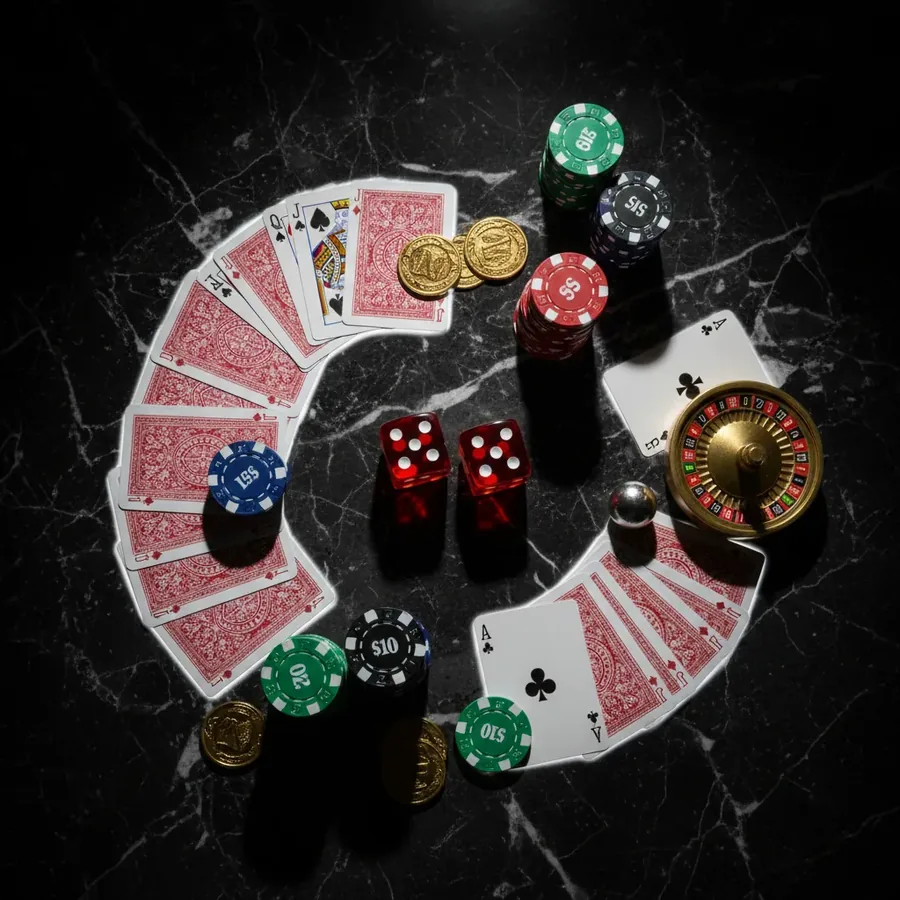
When to Surrender 16 vs 10?
The Blackjack Surrender rule, specifically Late Surrender, allows a player to forfeit half their bet after the dealer checks for blackjack, reducing the house edge by approximately 0.08 percent points. This rule can be particularly beneficial when holding a weak hand, such as 16 against a dealer's strong upcard.
While Late Surrender offers a marginal improvement, Early Surrender is considerably more valuable, potentially reducing the house edge by up to 0.6 percent points, though it is a rare rule to encounter. The strategic decision to surrender is most impactful when a player's hand is statistically unlikely to win against the dealer's revealed card.
For a hand of 16, surrendering against a dealer's 10 or Ace is generally advised in optimal strategy, as the probability of busting or ending up with a low total is high. Conversely, a hand of 10 is typically a strong starting point, often best played aggressively with a double-down bet in favourable circumstances, not surrendered.
Plein Pays 35:1, Cheval Pays 17:1
In the game of Roulette, a 'Plein' bet, also known as a Straight bet, is a wager on a single number. This bet offers a payout of 35 to 1, meaning a €1 bet returns €35 in winnings plus the original stake. This is a fundamental payout structure across all roulette variants.
A 'Cheval' bet, or Split bet, is a wager placed on the line between two adjacent numbers on the roulette layout. This bet pays 17 to 1, rewarding a player with €17 in winnings for every €1 wagered. The higher payout reflects the increased risk compared to even-money bets.
These payout structures are consistent whether playing on a Random Number Generator (RNG) roulette wheel or a live dealer table. For instance, European Roulette, with its 97.30% RTP, applies these fixed multipliers to all single-number and split bets, contributing to its consistent house edge of 2.70%.
La Partage applies only to even money bets
The La Partage rule in French Roulette significantly benefits players by refunding half of the stake on even money bets when the ball lands on zero. This rule is specifically applied to bets such as Red/Black, Odd/Even, and High/Low, effectively halving the house edge on these particular wagers.
When La Partage is active, the house edge for even money bets in French Roulette is reduced to a favourable 1.35%. This is a substantial improvement over the standard 2.70% house edge found on European Roulette or French Roulette without this rule applied to the relevant bets.
Crucially, La Partage does not extend to inside bets in French Roulette, such as Straight or Split bets. Therefore, these wagers retain the standard 2.70% house edge, as the rule is exclusively reserved for the 'even money' categories of bets, maintaining a clear distinction in player advantage.
Before sitting down: check table bet limits
Understanding table bet limits is essential before engaging in any roulette game, whether it's American Roulette with its 5.26% house edge or European Roulette at 2.70%. These limits define the minimum and maximum amounts a player can wager on a single spin or bet type, ensuring responsible gameplay.
For example, a specific table might have a minimum bet of €1 and a maximum bet of €100 on outside bets, with inside bets potentially having lower maximums. These figures are critical for managing bankroll and aligning gameplay with strategic objectives, preventing overspending or underutilizing potential winning opportunities.
Adhering to these limits is paramount, particularly when considering games like Video Poker Deuces Wild, which can have a very low house edge of 0.27% with optimal play, or Sic Bo with its wide range of house edges from 7.87% to 18.52%. Knowing the limits ensures players can participate within their means and enjoy the game responsibly.
Game categories at a glance
| Category | Examples | Stakes From | Highlight |
|---|---|---|---|
| Slots | Total Overdrive, Gonzo's Quest Megaways, Big Bass Bonanza | 0,10 EUR | thousands of titles |
| Table games | Roulette, Blackjack, Baccarat | 0,50 EUR | classic rules |
| Live casino | Blaze Roulette, Lightning Roulette | 0,20 EUR | real dealers |
| Jackpot games | Mega Moolah, Divine Fortune, Age of the Gods | 0,20 EUR | progressive pools |
| Instant games | Aviator, Plinko, Mines | 0,10 EUR | fast rounds |
| Video poker | Jacks or Better, Deuces Wild | 0,25 EUR | strategy based |
Straight 35:1 Instead of 36:1: Where House Edge Originates
The house edge in European Roulette originates from the payout structure for straight-up bets, which is 35:1 for a single number. While this offers a theoretical payout of 35 units for every 1 unit wagered, the presence of 37 sectors on the wheel (numbers 1-36 plus a single zero) means the actual odds are 36:1. This discrepancy creates a built-in advantage for the casino.
This 35:1 payout, applied to European Roulette with its 2.70% house edge, contrasts with American Roulette's significantly higher 5.26% house edge. The American version features an additional '00' sector, increasing the total number of sectors to 38. Consequently, the casino's advantage is amplified due to the doubled zero.
For players, this means that over extended play, the casino expects to retain 2.70% of all wagers placed on European Roulette, a figure derived directly from the 35:1 payout versus the 37 possible outcomes. This percentage is a long-term average and does not guarantee specific outcomes in any given session.
37 vs. 38 Sectors: One Zero Difference
The fundamental difference between European and American Roulette lies in the number of sectors on the wheel, with European Roulette featuring 37 sectors and American Roulette featuring 38. European Roulette includes numbers 1 through 36 plus a single zero (0), while American Roulette adds a double zero (00) to this set.
This single additional sector, the '00', directly impacts the house edge. On European Roulette, the house edge is 2.70% for all bets, including even money bets like Red/Black. In American Roulette, this same bet carries a higher house edge of 5.26% due to the increased number of possible outcomes.
The inclusion of the double zero in American Roulette effectively doubles the casino's inherent advantage. For example, an even-money bet on Red in American Roulette has a 1.35% higher house edge compared to the same bet on European Roulette, demonstrating the critical impact of the wheel's configuration.
9/6 table: nine for Full House, six for Flush
In Video Poker, specifically Jacks or Better, the '9/6' designation refers to the payout ratios for two key hands: a Full House pays 9 coins for every 1 coin wagered, and a Flush pays 6 coins for every 1 coin wagered. This particular payout table is considered a 'Full Pay' version.
This 9/6 payout table results in a Return to Player (RTP) of 99.54%, with a corresponding house advantage of 0.46%. This is a highly favourable rate for players compared to other video poker variations, such as the '8/5' table which offers an RTP of 97.29% and a higher house edge of 2.71%.
Playing on a 9/6 table maximizes the player's theoretical return over the long run. For instance, a player consistently betting 5 coins on a Royal Flush can win 4000 coins, whereas on a less favourable table, this payout might be significantly reduced, impacting overall profitability.
Martingale Fails After 8 Rounds at Table Limit
The Martingale betting strategy, which involves doubling the bet after each loss, is susceptible to table limits, rendering it unsustainable in the long term. If a player experiences a string of 8 consecutive losses while betting on an even-money outcome at a table with a maximum bet of €100, the strategy quickly becomes unviable.
Starting with an initial bet of €1, a sequence of 8 losses would require a bet of €256 in the 9th round. However, if the table limit is €100, the player cannot place the required double bet, thus breaking the Martingale progression. This limit prevents the strategy from recouping previous losses.
The RTP for even money bets in French Roulette with La Partage is 98.65%, with a house edge of 1.35%. Even with this favourable RTP, the inability to continue doubling bets due to table limits means the Martingale system cannot guarantee a win and can lead to significant losses before hitting the limit.
Video Poker: check payout table before betting
Before placing any bets on Video Poker, it is crucial for players to examine the payout table, as different tables offer significantly varied returns. For example, Jacks or Better has a '9/6' full pay table with an RTP of 99.54%, which is substantially better than the '8/5' table offering an RTP of 97.29%.
The difference in payout for specific hands, such as a Full House, can dramatically alter the game's overall return. The '9/6' variation pays 9 coins for a Full House, while the '8/5' pays only 8 coins for the same hand. This seemingly small difference accounts for a 2.25% RTP reduction.
Similarly, Deuces Wild offers an RTP of 99.73% with specific payout structures like 'Five of a Kind 16' and 'Straight Flush 10'. Players should always identify the most favourable payout table available to maximize their potential return and minimize the house advantage, ensuring they play with the best possible odds.
Punto Banco: 5 Percent Commission on Banker Wins
The Baccarat Banker bet offers a house edge of 4.84% with a typical 9:1 payout on ties, which is standard for online variations. This bet, while having a lower edge than the Player bet's 10.36% for pairs, still represents a significant house advantage. The commission on Banker wins is a crucial element in the game's economics, impacting overall player returns.
In Baccarat, the Banker bet is generally considered the strongest option despite the 5% commission levied on winning Banker hands. This commission effectively raises the house edge from what it would be without it. For instance, a direct comparison shows that the Baccarat Tie side bet, with an RTP of 95.16%, still has a higher house edge than the Banker bet.
Understanding the commission structure is vital for players engaging with Baccarat. The 5% commission on Banker wins is a standard feature designed to offset the inherent advantage the Banker hand possesses. This mechanic ensures that the casino maintains its edge over the long term, even with optimal play on the Banker bet.
How Much Does One Mistake Cost in 100 Hands?
In Jacks or Better Video Poker, the 8/5 paytable offers an RTP of 97.29%, resulting in a house advantage of 2.71%. A deviation from optimal strategy, such as incorrectly playing a hand that should be a full house, can significantly reduce this return. The difference between an 8/5 and a 9/6 paytable for Jacks or Better is substantial, affecting potential payouts.
Consider the impact of a suboptimal decision in Jacks or Better 8/5. If a player misplays a hand, the RTP can drop considerably from the theoretical 97.29%. For example, choosing a lower-paying hand combination instead of holding for a potentially higher one can lead to a loss of potential winnings over time. This highlights the importance of adhering to strategy.
The cost of a single strategic error in Jacks or Better can be quantified by the reduction in RTP. For instance, playing a hand incorrectly might mean missing out on a Royal Flush or a Full House payout. Over 100 hands, such mistakes can accumulate, leading to a noticeable decrease in the expected return compared to perfect play, which aims for the 97.29% RTP.
House Edge and RTP: Two Names for the Same Number
The theoretical RTP for European Roulette is 97.30%, meaning the house edge stands at 2.70%. This figure represents the average percentage of wagers that the casino expects to retain over an extended period of play. All bets on European Roulette, from single number stakes to even-money propositions, share this consistent house edge due to the single zero.
In contrast, American Roulette, with its double zero, presents a significantly higher house edge of 5.26%, corresponding to an RTP of 94.74%. This difference is directly attributable to the additional '00' sector on the wheel, increasing the total number of possible outcomes without altering the payout structures for most bets. For example, a straight bet still pays 35:1.
Understanding the relationship between house edge and RTP is fundamental for players. A higher RTP signifies a lower house edge, translating to better potential returns for the player in the long run. For instance, comparing European Roulette (97.30% RTP) to American Roulette (94.74% RTP) clearly demonstrates which variant offers a more player-favorable environment.
Double Down: double bet, only one card
Blackjack variations like Liberal Vegas Strip offer favourable rules, including a 3:2 payout for a blackjack and an RTP of 99.72% with a house edge of 0.28%. The 'Double Down' (DAS) option allows players to double their initial bet after receiving their first two cards, but they receive only one additional card. This rule can be strategically advantageous.
The 'Double Down' move in Blackjack is a powerful tool when used correctly, as it allows players to capitalize on favorable starting hands. In a game like Blackjack with 6 decks and a 3:2 payout, where the RTP is 99.54%, strategically employing a double down can improve expected outcomes. However, it is a high-risk maneuver, as only one card is dealt.
A key aspect of the 'Double Down' is that it restricts the player to receiving a single card after doubling their wager. This means that hands requiring multiple hits are not possible after this action. In Blackjack games with liberal rules, such as those allowing Double Down on any two cards and after splitting, this option can significantly influence the overall house edge.
Variance at the Table: 1:1 vs. 35:1
The payout structure at a Roulette table significantly influences game variance. A 'Straight Up' bet, paying 35:1, offers high volatility, meaning wins are infrequent but substantial when they occur. European Roulette, with a 2.70% house edge on all bets, including this high-payout option, provides a consistent theoretical return.
In contrast, even-money bets at the Roulette table, such as Red/Black or Odd/Even, pay 1:1 and represent low variance outcomes. These bets result in more frequent, smaller wins, contributing to a steadier player balance. The French Roulette with La Partage rule offers an RTP of 98.65% on these even-money bets, reducing the house edge to 1.35%.
The difference between a 1:1 payout on even-money Roulette bets and a 35:1 payout on a straight-up bet is a clear illustration of variance. Players seeking excitement and the potential for large, infrequent wins might favor the higher payout ratios, while those preferring more frequent, smaller returns would opt for the 1:1 payouts, understanding the trade-off in volatility.
Contact
Live - online chat
Banking







Providers











Winshark Casino 2026